


I once read a sentence that deeply affected me. It gave me a fresh perspective, and that is why it stayed with me. The sentence was this:
“Everyone thinks they are someone special, and in that sense they are very ordinary. Only when they realize they are ordinary do they become someone special.”
It is a strange sentence—one that requires attention and focus—and its tension and contradiction are fascinating.
We all imagine that we are very unique people. And in a way, we are. There is only one version of ourselves in this entire world. Every single person around us is unique—special—a one-person universe, singular and unmatched.
But this does not mean that the issues, problems, and laws of existence change their course when they reach us or create an exception for us.
It does not mean that disasters, pains, or illnesses are not meant for us.
These days I’m listening to Irvin Yalom’s book Man’s Search for Meaning in a Single Day. Like most of Yalom’s works, it is valuable and impactful.
There, Yalom shows how people, when faced with a terminal illness, move from denial to disbelief. Beyond the universal fear and denial of death, the point relevant to this discussion is our belief in our own specialness.
As if we think we shouldn’t get cancer, or become paralyzed in an accident, or lose a child, or endure any of the countless other trials…
When faced with hardship or tragedy, we often ask:
Why me?
Why my family?
Why… why?
A sentence in the book struck me deeply and remained with me:
“I am certainly not a special person.”
Which is both obvious and strangely unbelievable.
We are special and we are not.
We are ordinary and we are not.
Perhaps this is the essence of the matter:
the human being, full of contradictions and shadowed brightness.
We are all very ordinary—as long as we think we are special, because that belief is universal.
But when we accept that we, too, are ordinary, mortal, and exposed to accidents, illness, and death—perhaps only then do we become different from the rest.
If we see everyone as special—from the shopkeeper and the driver and the classroom teacher to those around us—and see ourselves as ordinary in our humanity, in our fallibility, in our incompleteness, and in our vulnerability to disaster, illness, and nonexistence…
At that moment, a transformation has occurred.
That is why, I believe, we all need to become someone special by seeing ourselves as ordinary, by seeing ourselves as just like everyone else.
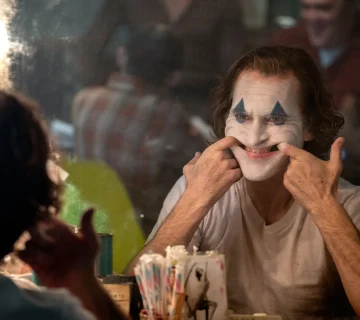
I look into the mirror searching for a new kind of gaze—
a gaze that is accepting, humble, and patient,
for it knows it is a being like all others,
with pains and problems alike,
an ordinary—and special—human being.


بدون دیدگاه