


Autism Spectrum Disorder (ASD)
What Everyone Should Know
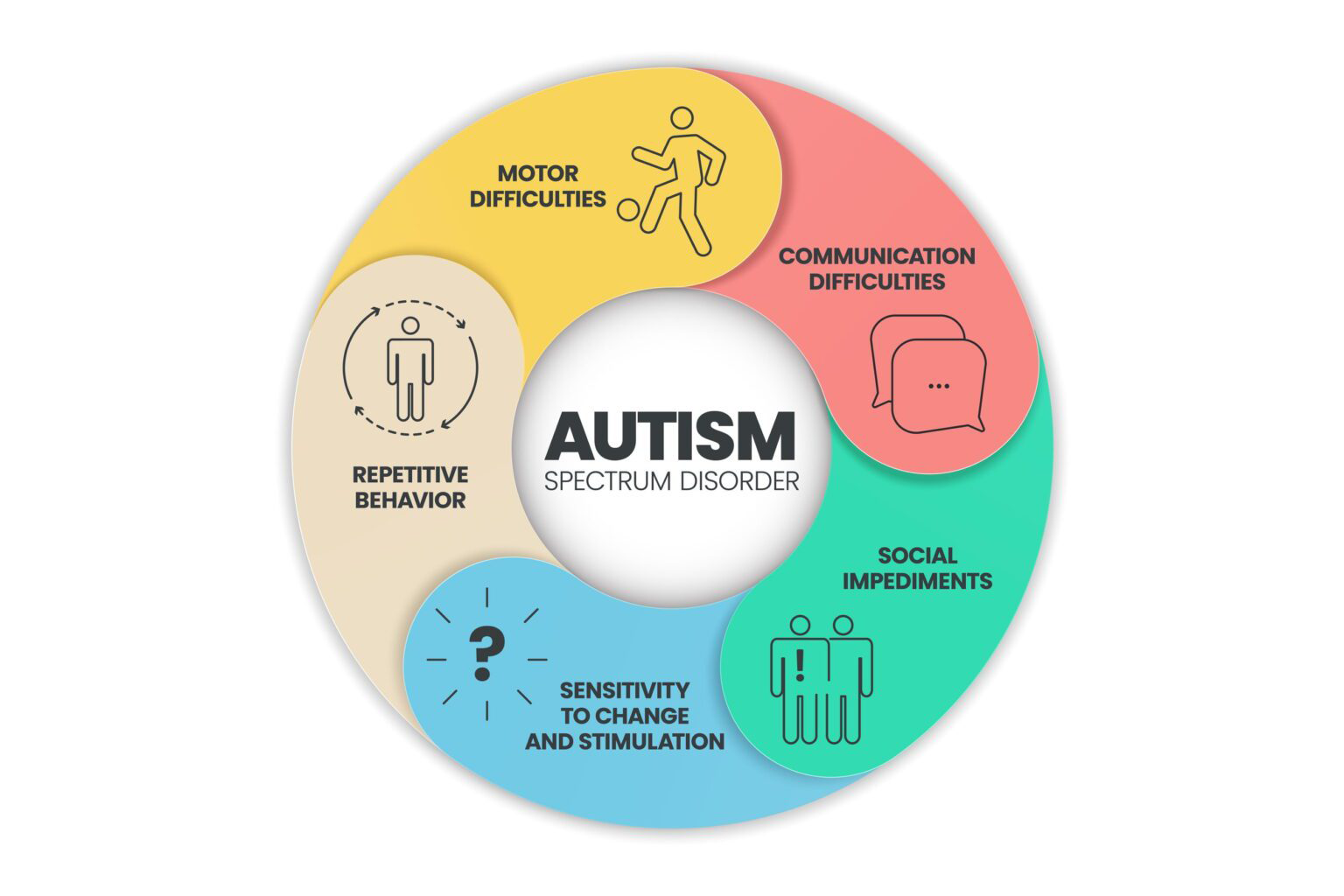
Autism Spectrum Disorder (ASD), or autism, is a neurodevelopmental difference/disorder. This means it originates in the way the brain develops and becomes organized, and its characteristics are usually present from the early years of life, although they are sometimes recognized later—especially in girls or in people with strong compensatory abilities.
The word “spectrum” is important: autism can look very different from one person to another. One person may require extensive support in daily life, while another may live independently, pursue education, work, and maintain relationships, yet still experience significant difficulties in social situations, sensory environments, or adapting to changes in life.
1) Core Characteristics of Autism
Clinical diagnosis is generally based on two main areas:
A) Differences in Social Communication and Interaction
These may include:
- Difficulty understanding indirect messages, sarcasm, jokes, body language, or unwritten social rules
- Differences in eye contact—not necessarily reduced eye contact, but sometimes eye contact that differs from social norms
- Difficulty initiating or maintaining back-and-forth conversations
- Talking at length about a topic of interest without noticing how interested the other person is
- Difficulty forming or maintaining friendships, particularly in socially ambiguous environments
- Expressing or receiving emotions in a different way
These characteristics do not mean that a person lacks feelings or empathy. Many autistic people experience deep empathy, but their way of understanding, expressing, or responding to emotions may be different.
B) Repetitive Patterns, Focused Interests, and Sensory Differences
For example:
- A strong need for order, routines, and predictability; significant distress when plans or routines change suddenly
- Very focused and deep interests in particular subjects
- Repetitive movements used to regulate emotions or sensory experiences, such as hand flapping, leg shaking, or playing with objects; these are sometimes referred to as stimming (self-stimulatory behavior)
- Being highly sensitive or under-sensitive to sounds, light, smells, touch, tastes, temperature, or crowded environments
- Noticeably strong attention to details or patterns
2) What Is Autism Not?
There are several common misconceptions:
- Autism is not caused by bad parenting.
- Vaccination does not cause autism. This claim has been repeatedly disproven by large-scale research.
- Autism does not equal intellectual disability. Cognitive abilities among autistic people vary widely.
- Autism does not equal being a genius, either. Some autistic people have exceptional abilities, but this is not a universal characteristic.
- An autistic person is not necessarily isolated, unemotional, or uninterested in relationships. Often, the difficulty lies in navigating complex and unwritten social rules or tolerating sensory overload.
- Autism is not contagious, nor is it something that can simply be “cured and eliminated.” The goal of professional support is to reduce distress and barriers, strengthen skills, and improve quality of life—not to forcibly change a person’s personality.
3) Possible Signs in Childhood
No single sign, by itself, indicates autism. However, a professional evaluation may be appropriate if a child:
- Responds less consistently to their name or has limited shared attention
- Points less often to show interest or to share attention with others
- Has limited symbolic or pretend play, such as engaging less often in role-playing
- Has delayed speech or uses language in repetitive or unusual ways
- Has an extremely strong reaction to changes in routine
- Shows prominent repetitive behaviors or sensory sensitivities
- After a period of apparently typical development, shows a reduction in some communication or language skills
Important: Delayed speech alone does not mean autism, and good eye contact does not rule autism out.
4) Autism in Adolescents and Adults
Some people are not diagnosed until adolescence or adulthood. This is more common among people who have learned to imitate or “mask” social behaviors.
Possible characteristics in adulthood may include:
- Severe exhaustion after social interactions
- A strong need for solitude to recover energy
- Chronic difficulty understanding relationships, sarcasm, or social expectations
- Deep and highly focused interests
- Sensory sensitivities and avoidance of crowded environments
- Significant anxiety when routines change or situations are ambiguous
- A lifelong feeling of being “different” without understanding why
These characteristics can overlap with social anxiety, ADHD, obsessive-compulsive disorder (OCD), depression, or personality traits. Therefore, internet-based self-diagnosis cannot replace a clinical assessment.
5) How Is Autism Diagnosed?
Autism is not diagnosed through a blood test or brain scan. The assessment process generally includes:
- A detailed discussion of the person’s development, behaviors, relationships, abilities, and difficulties
- Gathering information from parents or close relatives, when possible
- Clinical observation
- Assessment of language, cognition, adaptive skills, and co-occurring psychiatric conditions
- Use of standardized assessment tools when appropriate
Diagnosis should be made by a professional who is knowledgeable about autism—such as a child and adolescent psychiatrist, a trained clinical psychologist, or a multidisciplinary assessment team.
6) Treatable Co-Occurring Conditions
Autism may occur alongside other conditions, including:
- Anxiety and depression
- Attention-Deficit/Hyperactivity Disorder (ADHD)
- Sleep disorders
- Gastrointestinal or feeding difficulties
- Epilepsy in some individuals
- Learning difficulties
- Self-injurious behaviors or behavioral crises, particularly during severe sensory or communication overload
These conditions should be assessed separately and taken seriously, because a significant part of an individual’s distress may result from these co-occurring conditions or from an environment that does not adequately accommodate their needs.
7) What Does Effective Support Look Like?
Good support is person-centered and depends on the individual’s age, abilities, needs, family, and living environment. It may include:
- Communication and daily-living skills training and rehabilitation
- Speech and language therapy when needed
- Occupational therapy, particularly for functional skills and sensory processing
- Psychological support for anxiety, depression, emotional regulation, and self-esteem
- Education and support for families and schools
- Environmental accommodations: reducing sensory stimuli, providing predictable routines, giving clear instructions, and allowing sufficient processing time
- Medication only for specific co-occurring conditions, not as a treatment for autism itself
8) How Can We Communicate Better With an Autistic Person?
- Speak clearly, directly, and without unnecessary ambiguity.
- Minimize sarcasm, irony, and vague instructions whenever possible.
- Give the person enough time to respond, process information, or adjust to a change in plans.
- Give advance notice before touching them or making unexpected changes to their routine.
- Take sensory needs seriously; a crowded environment or sound that is tolerable for others may genuinely be painful or overwhelming for them.
- Do not unnecessarily suppress harmless self-regulating behaviors, such as hand flapping or using headphones.
- Do not define a person solely by their diagnosis; autism is only one aspect of their identity.
- Rather than focusing solely on “making the person appear normal,” focus on reducing distress, increasing independence, safety, and quality of life.
Conclusion
Autism is a diverse neurodevelopmental spectrum, not a single template that applies equally to everyone. A proper understanding of autism helps us avoid confusing differences with rudeness, lack of interest, low intelligence, or moral weakness.
Timely identification and respectful support can significantly improve the lives of autistic people and their families.
If you notice characteristics in a child, adolescent, or adult that are persistent and interfere with school, work, relationships, or daily life, seeking a professional assessment is an appropriate next step.
Mental Health
This page shares articles and information related to psychology and psychiatry.
ID:
https://ble.ir/jamehvasalamtravan
Dr. Hamid Yousefi’s Website
Psychiatrist





بدون دیدگاه