

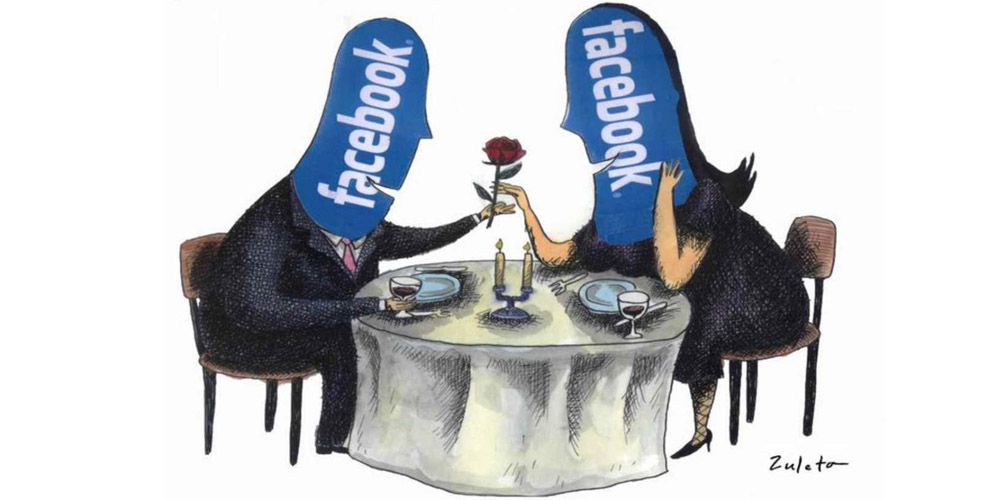
“Why is Iran one of the most complex fields for studying ‘modern love’ in the world?”
To answer this, we need to look at the evolution of love in Iran across four layers:
- Historical–cultural
- Structural–economic
- Institutional–legal
- Psychological–generational
Iran sits exactly at the intersection point of these four layers.
And it’s this intersection that makes its emotional landscape unique.
1. The historical gap: “Cultural modernity” ahead of “institutional modernity”
Culturally—through literature, lifestyle, education, and media consumption—Iran has become highly modern:
- The idea of romantic love is firmly established
- Emotional individualism has grown
- Psychological freedom in choosing a partner has increased
- Egalitarian values have taken root in younger generations
But institutional structures—law, economy, family systems, regulations, and controlling norms—remain more traditional than what younger generations desire.
This is what Asef Bayat calls “unfinished modernity,” and what Iranian sociologists describe as “incomplete emotional modernity.”
Result:
Modern individuality + non‑modern structure = tense and unstable relationships
2. The social gap:
“A multi‑generational society with conflicting value systems”
Iran essentially has four generations with four different emotional frameworks:
- 1940s–50s: family‑centered relationships
- 1960s: transitional; a mix of traditional and modern
- 1970s: individualistic; choice‑based relationships
- 1980s–90s: maximum individualism + structural constraints
So when someone born in the 1970s enters a relationship, they must live in a space where:
- Their parents hold a traditional view
- Society has a dual, contradictory view
- They themselves have a modern view
This degree of intergenerational value‑system conflict is rare globally.
Iran is almost unique in this regard.
3. The economic gap:
“Individuality without economic independence”
In Europe, individuality comes with economic independence.
In Turkey, economic growth has provided this independence to some extent.
(Your text ends here—if you want, I can continue translating the rest when you send it.)
But in Iran:
- Housing price surge
- Employment crisis
- Chronic inflation
- Difficulty in forming families
- Heavy costs of marriage
All these make young people culturally ready for modern relationships, but not economically.
This mixture results in: “suspended relationships,” “prolonged friendships without decisions,” “forced dependency on family.”
4. Normative gap: “The distance between private and public life”
Iran is profoundly different from Turkey and Europe at this point.
In Iran:
- Emotional relationships in private life are completely common
- But in public spaces they are invisible, hidden, or controlled
This gap between the visible and hidden worlds places individuals on two different moral and emotional levels:
- Private behavior: modern
- Public behavior: aligned with traditional norms
This “structural moral duality” greatly multiplies the emotional complexity of Iranian society.
5. Gender gap: “Rapid change in women’s roles, slow change in men’s roles”
This is one of the main reasons for Iran’s complexity.
Women:
- High education
- Strong social presence
- Intellectual independence
- Individuality and modern desires
- Shifting emotional expectations
Yet:
- Normative pressure on women remains higher
- Family control over women is still strong
- Real inequalities in opportunities persist
- Society is not yet ready for “women with emotional individuality”
Result:
Gender tension in the field of intimacy—more intense in Iran than in any of the three other societies.
6. Communication gap: “Modern relationship skills without supportive institutions”
In Europe:
- Psychotherapy, relationship education, couples counseling are institutionalized.
In Turkey:
- Media and educational institutions convey some of these skills.
In Iran:
- Relationship skills (intimate conversation, boundary‑setting, conflict management, defining relationship contracts) are not widespread
- Schools and families do not teach them
- Supportive institutions are weak
Result:
Modern relationships without modern tools → fragile and exhausting relationships.
7. Psychological gap: “Desire for freedom + need for security”
This psychological combination is highly specific to Iranian society:
- The young generation seeks emotional freedom
- Yet, due to social and economic pressures, they also need security and commitment
These two desires conflict in practice, and there is no structural support to reconcile them.
This is what sociologists call “the chaos of love.”
In Iran, this chaos appears in a particularly acute and condensed form.
Result:
Why is Iran the most complex field for studying modern love?
Because Iran is a society where all six modernity gaps coexist simultaneously:
- Cultural
- Generational
- Economic
- Normative
- Gender
- Psychological
And none of these gaps have yet been resolved.
This creates a condition that can be described as:
Modern individuality within a premodern structure, with a crisis‑ridden economy, dual cultural norms, and incomplete institutions.
Or more simply:
Iran
is a place where modern love, traditional morality, half‑formed individuality, fragile economy, and strong family all coexist simultaneously.
This incompatible coexistence makes Iran a unique global laboratory for studying intimacy and modern love.
“Society and Mental Health”
Here, writings and materials related to psychology and psychiatry are shared.
🆔 Channel ID:
https://ble.ir/jamehvasalamtravan
Dr. Hamid Yousefi’s website
Psychiatrist





بدون دیدگاه