


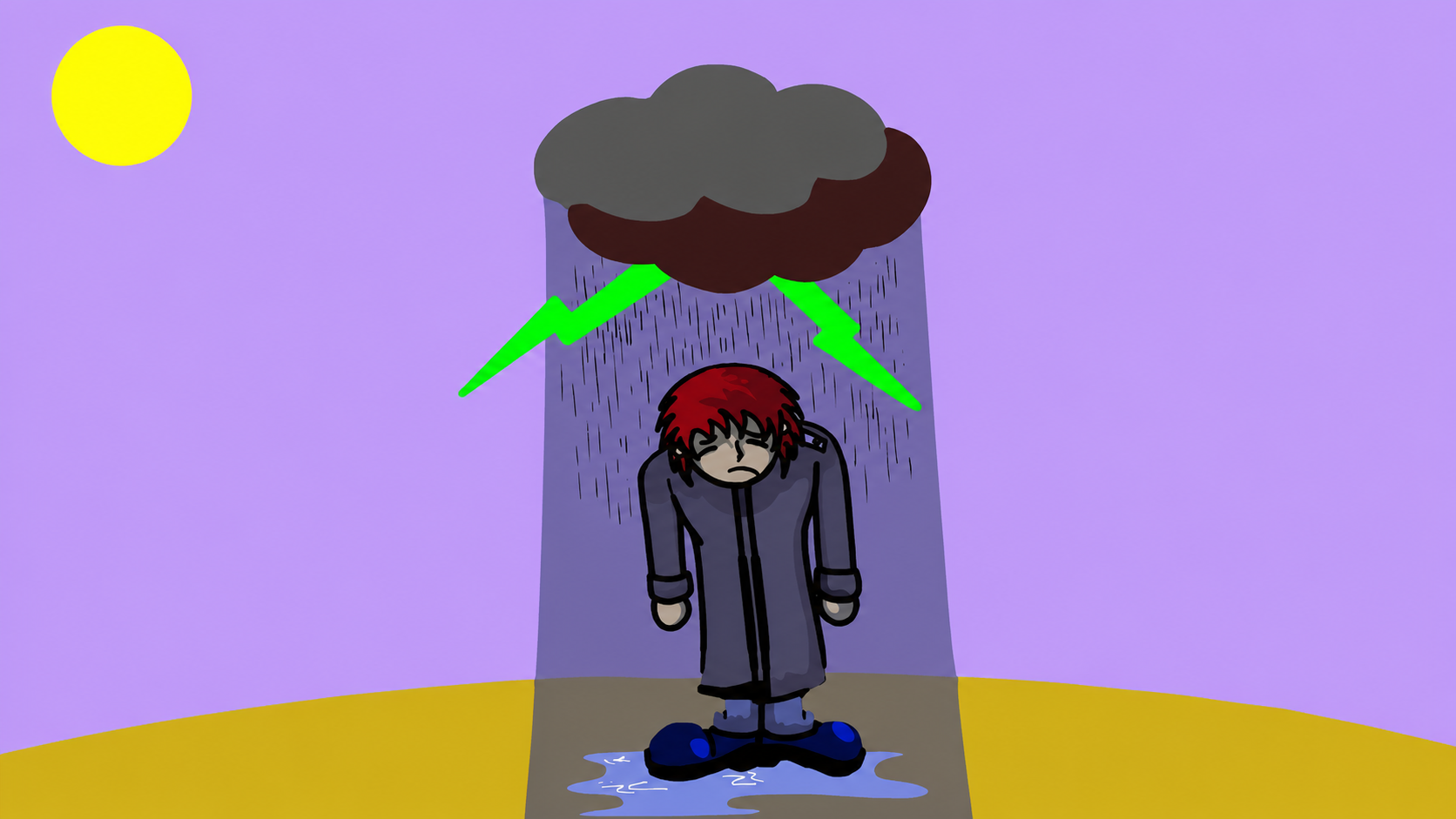
The Passing Cloud Metaphor for Depressive Episodes
The “Passing Cloud” metaphor is one of the most important and effective cognitive and therapeutic tools used in Acceptance and Commitment Therapy (ACT) and Mindfulness for coping with depressive episodes. It helps individuals redefine their relationship with dark thoughts, painful emotions, and low mood.
1. The Nature of the Metaphor
In this mental model, psychological experience is divided into two primary elements:
The Sky
The sky represents the vast, deep, and ever-present foundation of who we are—our essential self. It has the capacity to contain every kind of weather without being damaged or fundamentally changed by it.
The Clouds (Thoughts, Emotions, and Physical Symptoms of Depression)
The clouds symbolize transient, changing, and temporary psychological experiences that appear within the sky. They may be light and white, or dark, heavy, and stormy—the latter representing severe depression.
2. Psychological Functions of the Metaphor During Depressive Episodes
This metaphor activates three key therapeutic processes.
A. Cognitive Defusion
At the peak of a depressive episode, people often experience cognitive fusion, where the boundary between themselves and their thoughts disappears. For example, the thought “I am worthless” is accepted as an absolute truth rather than simply a mental event.
The metaphor’s message:
“You are not the cloud; you are the sky.”
This reminds us that we are the observer (the sky), not the psychological event itself (the cloud of depression). The mind is generating dark clouds, but our authentic identity extends far beyond this temporary weather.
B. Acceptance Without Resistance
Fighting the symptoms of depression often intensifies the negative feedback loop, creating secondary emotions such as frustration, shame, or hopelessness—essentially becoming depressed about being depressed.
The metaphor’s message:
The sky never fights the clouds or tries to push them away or destroy them. Instead, it simply makes room for them to exist.
Accepting the presence of these clouds—without endorsing or surrendering to the hopeless messages they carry—helps reduce unnecessary secondary suffering.
C. Recognizing the Temporary Nature of Experience
One of the core cognitive distortions in depression is the belief in permanence and universality—the painful conviction that:
“This will never end.”
The metaphor’s message:
Clouds are, by their very nature, constantly moving and changing. Even the darkest storms and the heaviest rain clouds are dynamic phenomena that eventually shift, dissolve, and pass.
The blue sky always remains behind the clouds, even when it is temporarily hidden from view.
3. A Step-by-Step Practice
When overwhelmed by depressive thoughts, the following practice can help apply the metaphor in daily life.
Step 1: Observe and Name
As soon as discouraging thoughts arise, instead of becoming absorbed by them, gently say to yourself:
“I am noticing the cloud of ‘worthlessness’.”
or
“I am noticing the cloud of ‘complete exhaustion’ moving through the sky of my mind.”
Step 2: Create Distance
Take a slow, deep breath.
Imagine yourself as a vast, open sky in which this heavy feeling is temporarily suspended. Allow the clouds to be exactly as they are, without trying to reshape them, push them away, or make them disappear.
Step 3: Commit to a Valued Action
While the clouds are still present, ask yourself:
“What is one small action, consistent with my values, that I can take even while these clouds are here?”
This might be:
- Reading a few pages of a book.
- Taking a short walk.
- Making and enjoying a cup of tea.
The sky does not wait for the clouds to disappear before continuing to exist.
The sky welcomes clouds, birds, and every natural and human experience.
And although the clouds inevitably pass, life continues to unfold within the vastness of the sky.
Mental Health
This space is dedicated to sharing writings and resources related to psychology and psychiatry.
Channel:
https://ble.ir/jamehvasalamtravan
Dr. Hamid Yousefi
Psychiatrist
Website:
https://www.drhamidyousefi.com/







بدون دیدگاه