


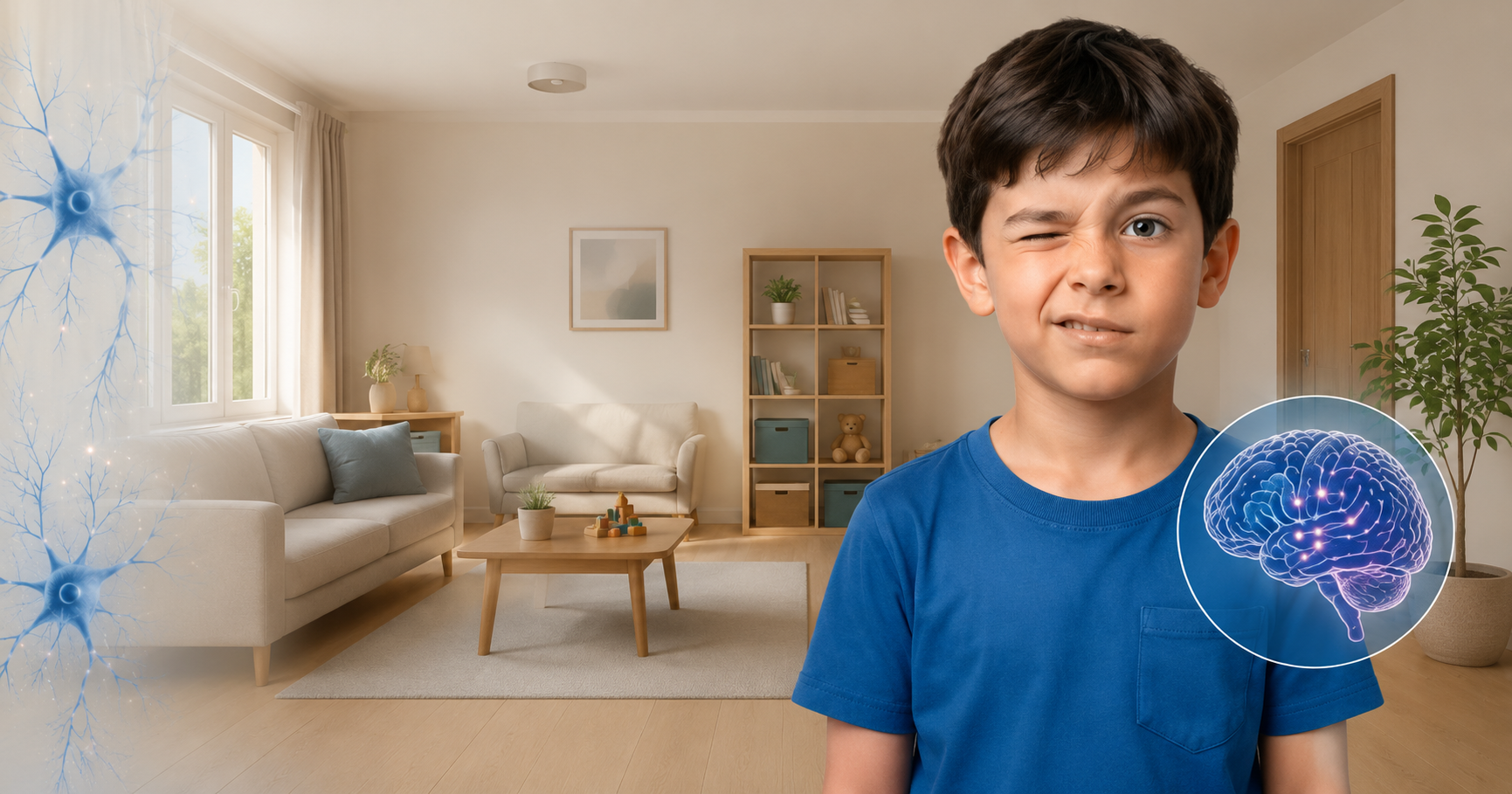
Tic Disorders in Children
An Educational Guide for Parents and the General Public
Seeing a child make sudden movements or repeatedly produce unusual sounds can be alarming for parents. In many cases, however, these involuntary behaviors—known as tics—are common, temporary, and manageable. Understanding tic disorders helps reduce family anxiety and promotes an appropriate and supportive response toward the child.
1. What Is a Tic?
Tics are sudden, rapid, recurrent, non-rhythmic, involuntary movements (motor tics) or sounds (vocal tics).
Premonitory Urge
Older children often experience an unpleasant physical sensation—such as itching, tingling, tension, or pressure in a particular part of the body—just before a tic occurs. Performing the tic temporarily relieves this sensation.
Voluntary or Involuntary?
Tics are involuntary. However, many children can suppress them for a short period through intense concentration (for example, during class). Suppressing tics usually increases internal tension, and eventually the tic reappears with greater intensity.
2. Types of Tics
Tics are broadly classified into two categories:
A. Motor Tics
Simple Motor Tics
- Frequent blinking
- Shoulder shrugging
- Head jerking
- Facial grimacing
- Mouth movements or jaw stretching
- Staring
Complex Motor Tics
More coordinated movement patterns, such as:
- Specific facial gestures
- Touching objects or people
- Smelling objects
- Jumping
- Imitating other people’s movements (echopraxia)
B. Vocal Tics
Simple Vocal Tics
- Throat clearing
- Unexplained coughing
- Sniffing
- Grunting
- Screaming
- Making animal sounds
Complex Vocal Tics
- Repeating one’s own words or phrases (Palilalia)
- Repeating other people’s words (Echolalia)
- Sudden use of socially inappropriate or obscene words (Coprolalia)—contrary to popular belief, this symptom is very rare.
3. Types of Tic Disorders Based on Duration and Severity
According to current clinical classifications, there are three main tic disorders:
1. Provisional (Transient) Tic Disorder
Motor and/or vocal tics lasting less than one year. This is the most common type and usually resolves spontaneously.
2. Persistent (Chronic) Motor or Vocal Tic Disorder
Motor tics or vocal tics (but not both) that persist for more than one year.
3. Tourette Syndrome
The presence of at least two motor tics and at least one vocal tic (not necessarily occurring simultaneously), lasting more than one year, with onset before the age of 18 years.
4. Why Do Children Develop Tics?
The exact cause of tic disorders is not fully understood. However, several factors are believed to contribute:
- Genetics and family history: Tic disorders often run in families.
- Neurobiological factors: Imbalances in neurotransmitters—particularly dopamine—within brain regions responsible for movement control, especially the basal ganglia.
- Environmental and psychological factors: Stress, fatigue, excitement, sleep deprivation, and anxiety can significantly increase the frequency and severity of tics.
Note: Stress is generally not the primary cause of tic disorders; rather, it acts as a trigger that worsens existing tics.
5. Associated Conditions (Comorbidities)
In many children—especially those with Tourette syndrome—tics are not the only concern and may coexist with other conditions, including:
- Attention-Deficit/Hyperactivity Disorder (ADHD): The most common associated condition.
- Obsessive-Compulsive Disorder (OCD): Characterized by intrusive thoughts and repetitive rituals or compulsions.
- Learning disorders
- Anxiety disorders
- Behavioral problems or difficulties with impulse control
6. The Vital Role of Parents:
What Parents Should and Should Not Do
| What Not to Do | What to Do |
|---|---|
| Do not criticize, scold, or punish. Telling the child things like “Stop it” or “Don’t blink,” or punishing them, is ineffective and usually worsens tics by increasing anxiety. | Ignore mild tics. The best approach to simple, temporary tics is active ignoring, allowing the child’s attention to shift away from the behavior. |
| Do not focus excessively on the tic. Constantly watching the child or repeatedly discussing the tic in their presence increases stress. | Reduce stress and tension. Create a calm home environment, establish healthy sleep routines, and minimize excessive academic or social pressure. |
| Do not restrict the child’s activities. Limiting participation because of fear of others’ judgment can damage self-esteem. | Educate others. Work with teachers and family members to create an accepting environment free from ridicule or judgment. |
7. When Should You Consult a Child Psychiatrist?
Many transient tics do not require medication. However, professional evaluation is recommended if:
- Tics interfere with studying, writing, or daily activities.
- Tics cause physical pain or injury (such as neck pain from repetitive head jerking).
- The child becomes socially isolated, depressed, or develops significantly reduced self-esteem because of teasing or bullying.
- Tics are accompanied by significant symptoms of ADHD, aggression, or severe OCD.
8. Treatment Options
Treatment depends on how much the tic disorder affects the child’s daily life and functioning.
1. Psychoeducation
The first step is educating parents, teachers, and caregivers about tic disorders and appropriate ways to respond.
2. Behavioral Therapy
Behavioral interventions are considered first-line treatment for many children, particularly:
- Habit Reversal Training (HRT)
- Comprehensive Behavioral Intervention for Tics (CBIT)
These approaches teach the child to recognize the urge preceding a tic and perform a competing response instead.
3. Medication
Medication may be recommended when tics are severe, cause physical harm, or significantly impair academic, social, or emotional functioning.
A child psychiatrist may prescribe medications that:
- Help regulate dopamine activity.
- Treat coexisting anxiety or ADHD when appropriate.
Medication does not completely eliminate tics but can substantially reduce their severity and improve quality of life.
Mental Health
This page shares articles and educational materials related to psychology and psychiatry.
Channel ID:
https://ble.ir/jamehvasalamtravan
Dr. Hamid Yousefi
Psychiatrist







بدون دیدگاه