


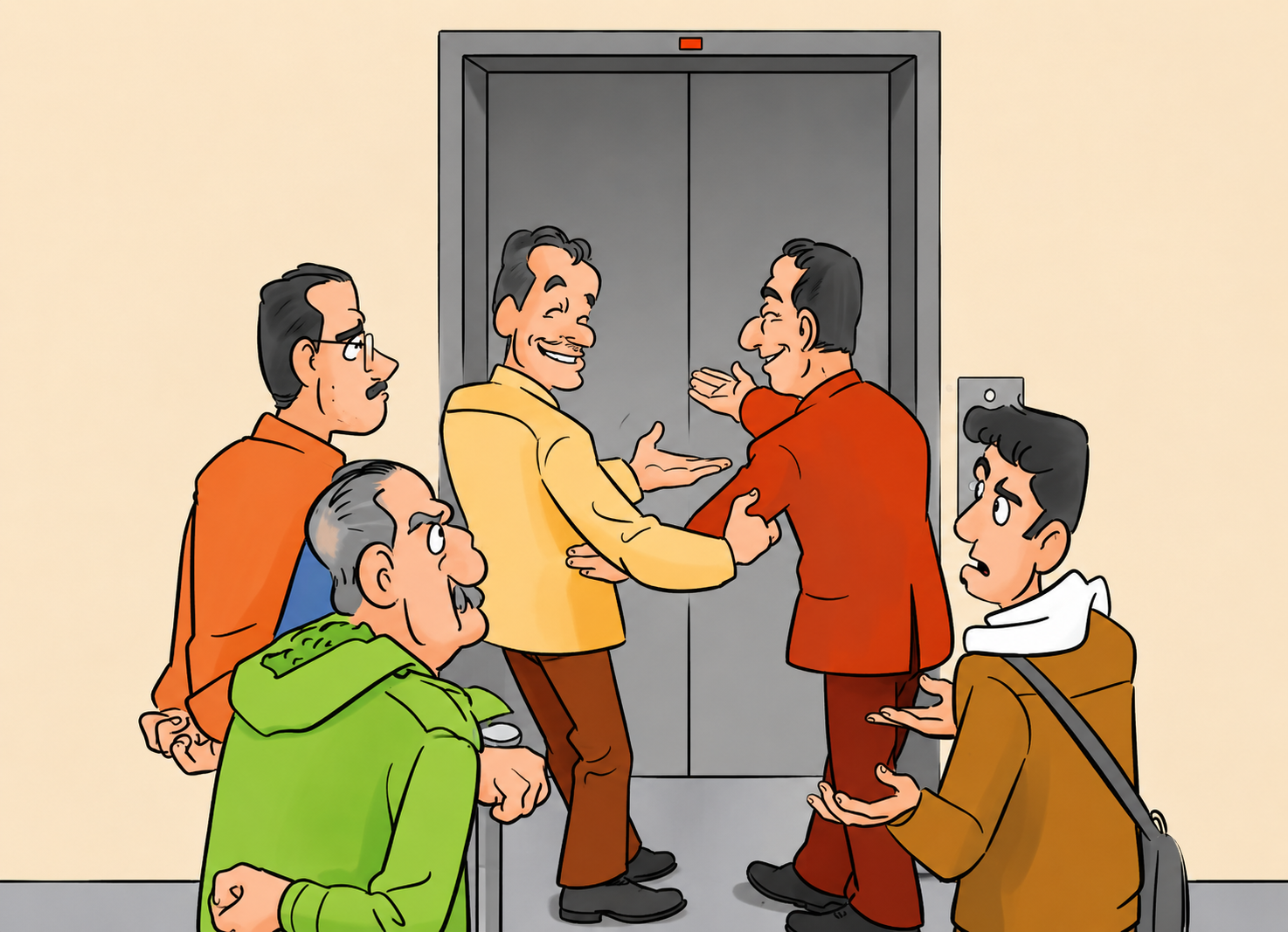
Cultural Politeness (Taarof) and Mind-Reading in Iranian Culture
One of the characteristics of communication in many Middle Eastern and Asian cultures, including Iran, is that a significant part of the meaning is not expressed directly. Instead, the other person is expected to infer it or understand it through subtle cues.
In communication psychology, this pattern is sometimes referred to as “cultural mind-reading.”
This concept is closely related to taarof, the Iranian system of politeness and social etiquette.
1) What Is Mind-Reading in Psychology?
In cognitive psychology, mind-reading usually refers to a cognitive distortion:
A person assumes that they know what other people are thinking.
Examples:
- “They must think I’m rude.”
- “I know they’re actually upset with me.”
At the cultural level, however, the situation is somewhat different.
In some cultures, there is a social expectation that people should infer one another’s intentions.
2) How Does Taarof Create Mind-Reading?
In many expressions of taarof, the actual meaning is hidden behind a layer of politeness.
For example:
“Ekhtiyar darid” (اختیار دارید)
Depending on the context, it may mean:
- “You really don’t have to.”
- Or: “Please insist.”
Or:
“Beفرمایید شام بمانید” (Please stay for dinner.)
This may be:
- a genuine invitation,
- or simply an expression of social politeness.
Therefore, the listener has to analyze subtle signals, such as:
- tone of voice,
- body language,
- the degree of insistence,
- social context.
This process can be described as social mind-reading.
3) High-Context and Low-Context Cultures
Anthropologist and communication scholar Edward T. Hall divided cultures into two broad categories:
High-Context Cultures
A significant portion of the message is communicated indirectly.
Characteristics include:
- frequent use of politeness rituals and indirect expressions,
- importance of body language,
- importance of relationships,
- an expectation of implicit understanding.
Examples often include:
- Iran
- Japan
- China
- Arab countries
Low-Context Cultures
Messages tend to be direct and explicit.
Characteristics include:
- directly expressing one’s wishes,
- an emphasis on clarity,
- less reliance on formal politeness rituals.
Examples often include:
- Germany
- the Netherlands
- the United States
- Scandinavian countries
4) Psychological Consequences of Cultural Mind-Reading
1. Increased Cognitive Load
A person may constantly have to analyze:
- “What does this person really mean?”
- “Should I accept?”
- “Should I insist?”
This mental processing requires cognitive effort and energy.
2. Greater Potential for Misunderstanding
If the interpretation is incorrect:
- a person may take a polite refusal seriously,
- or they may reject a genuine invitation.
3. Reinforcement of Social Anxiety
People may become concerned that they have misunderstood the other person’s intention:
“What if I understood what they meant incorrectly?”
4. Development of Subtle Social Skills
On the other hand, these cultural patterns can also encourage greater social sensitivity.
People may learn to:
- read body language,
- analyze tone of voice,
- recognize subtle social cues.
5. Taarof and Theory of Mind
In cognitive science, there is a concept known as Theory of Mind.
It refers to the ability to understand that other people have their own:
- thoughts,
- emotions,
- intentions.
Cultures in which taarof is common may, to some extent, exercise this skill because people are frequently required to infer the intention behind someone’s words.
6. Taarof and Close Relationships
Interestingly, in very close relationships, the use of taarof often decreases.
Why?
Because in close relationships:
- less mind-reading is necessary,
- direct communication feels safer,
- there is greater trust.
For this reason, communication within many families or close friendships becomes much more direct.
Summary
Taarof is not simply a form of politeness; it is part of an indirect communication system in which people are often expected to infer some of the hidden intentions behind what is being said.
This system has both advantages and disadvantages.
Advantages
- Preserving respect
- Reducing direct conflict
- Enhancing social sensitivity
Disadvantages
- Communication ambiguity
- Increased cognitive load
- Greater potential for social anxiety
Mental Health
Psychology- and psychiatry-related information and educational materials are shared here.
🆔 Channel ID:
https://ble.ir/jamehvasalamtravan
Dr. Hamid Yousefi’s Website
Psychiatrist
https://drhamidyousefi.com/







بدون دیدگاه