


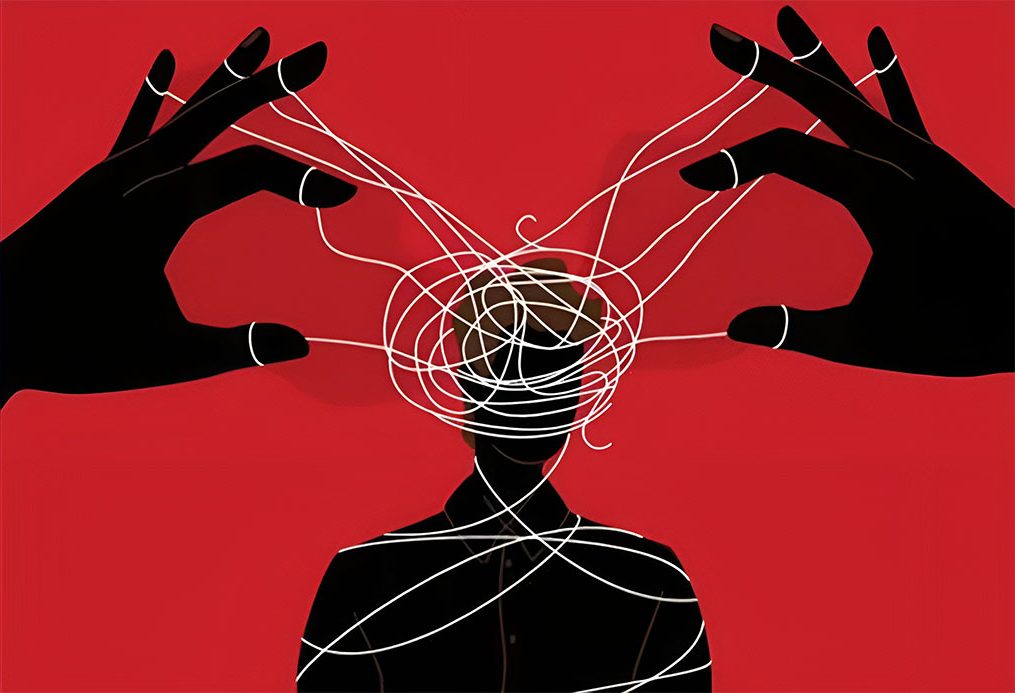
Why Do Some People Engage in Gaslighting?
(Psychological manipulation that distorts another person’s perception of reality)
Gaslighting
- The Need for Control
The most common reason is the desire to control the relationship.
When someone can make you question your perception of reality:
- You trust your own judgment less
- You become more dependent on them
- Your ability to make decisions is weakened
In this way, gaslighting becomes a tool of psychological domination.
- Avoiding Responsibility
Some people cannot tolerate admitting they are wrong.
So instead of saying:
“I made a mistake,”
they change the narrative:
- “You misunderstood.”
- “I never said that.”
- “You’re too sensitive.”
This mechanism is a form of psychological defense used to preserve a positive self-image.
- Certain Personality Traits
This behavior is more common in some personality patterns or disorders, such as:
- Narcissistic traits
A strong need for superiority and admiration.
- Antisocial traits
Using other people instrumentally for personal gain.
- Borderline traits in certain situations
Extreme shifts in perception and blaming others during times of stress.
[Of course, not everyone who engages in gaslighting has a personality disorder.]
- Learning It in the Family Environment
Some people grow up in families where:
- Children’s emotions were invalidated
- Reality was denied
- Constant blame existed
As a result, this communication style becomes a learned behavioral pattern that repeats itself.
- Preserving Social Image
Sometimes a person wants to maintain their image in front of others.
So they reshape the narrative in a way that:
- Makes them appear rational
- Makes you appear irrational
This can also occur in workplace and social relationships.
- Deep Insecurity
Interestingly, many controlling behaviors are rooted in deep insecurity.
A person may fear:
- Rejection
- Losing power
- Or having their weaknesses exposed
So by distorting reality, they attempt to maintain their psychological balance.
An Important Point
There is an important distinction in gaslighting:
- Sometimes it happens unconsciously (as a psychological defense)
- Sometimes it is conscious and strategic (as a tool for control)
The second type usually causes far greater psychological harm and is often used by deeply disturbed individuals.
“Society and Mental Health”
This channel shares writings and materials related to psychology and psychiatry.
ID:
https://ble.ir/jamehvasalamtravan
Website of Dr. Hamid Yousefi
Psychiatrist






بدون دیدگاه