


Techniques for Managing the Behavior of a Hyperactive Child at Home
In managing a child with ADHD, practical behavioral methods used in evidence‑based psychotherapies—such as Parent Management Training and Behavior Therapy—can have a significant impact.
1. The “One Instruction at a Time” Rule
Children with ADHD have difficulties with working memory. Therefore, present only one request at a time.
How to apply:
- Give only one short, clear instruction.
- Make eye contact.
- Ask the child to repeat the instruction.
Example:
Instead of saying, “Go wash your hands, then get dressed and come eat,” say:
“Please wash your hands first.”
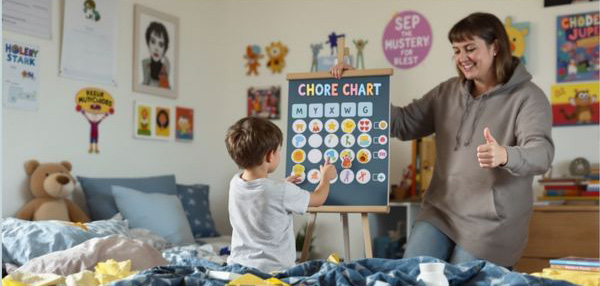
2. Using a Reward System
This is one of the most effective behavioral therapy techniques.
How to apply:
- Give stars or points for desired behaviors.
- After points accumulate, give a small reward.
Example:
- Doing homework = 1 star
- Cleaning the room = 1 star
- 5 stars = choosing a favorite game
3. Breaking Tasks into Small Steps
Children with ADHD get tired quickly when doing long tasks.
Method:
- Divide tasks into short segments.
Example:
- 10 minutes of studying
- 5 minutes of break
- Another 10 minutes of studying
4. Using a Timer
Time perception is weaker in these children.
Method:
- Use a timer or a clock.
Example:
- “We have 15 minutes to do homework.”
This helps build a mental structure of time.
5. Creating a Consistent Daily Routine
In ADHD, the prefrontal cortex functions less effectively in planning. Therefore, it is better to have:
- A fixed bedtime
- A specific time for studying
- A specific time for play
Predictable schedules reduce the child’s anxiety.
6. Physical Contact and Attention Before Speaking
When a child is deeply engaged in an activity, they often do not hear instructions.
Method:
- Move closer
- Place a hand on the child’s shoulder
- Make eye contact
- Then give the instruction
7. The Rule of Immediate Consequences
Children with ADHD have difficulty linking behavior to delayed consequences.
Therefore:
- Rewards or consequences should occur immediately after the behavior.
Example:
- “Great job cleaning up your toys.”
8. Proper Use of “Time‑Out”
(A type of behavioral punishment)
When used correctly for severe behaviors
(aggression, destruction):
Method:
- The child sits in a calm place for 3 to 5 minutes.
- No arguing or long explanations.
Goal:
To stop inappropriate behavior, not to use humiliating punishment.
9. Increasing Daily Physical Activity
Exercise leads to:
- Increased dopamine and norepinephrine
- Improved attention
- Reduced impulsivity
Suitable activities:
- Swimming
- Running
- Cycling
- Martial arts
10. Creating a Low‑Stimulation Study Environment
For doing homework:
- A simple, tidy desk
- Remove TV and mobile phones
- Proper lighting
- Limited items on the desk
A cluttered environment leads to increased distraction.
Summary
Providing structure and rules,
immediate rewards,
and short‑term behavioral consequences
are effective in improving a child’s functioning.
For better control of the symptoms of
Attention‑Deficit/Hyperactivity Disorder (ADHD),
a combination of
medication treatment + behavioral therapies
is necessary.
“Community and Mental Health”
Here, writings and materials related to psychology and psychiatry are shared.
🆔 Channel ID:
https://ble.ir/jamehvasalamtravan
Dr. Hamid Yousefi’s Website
Psychiatrist






بدون دیدگاه