


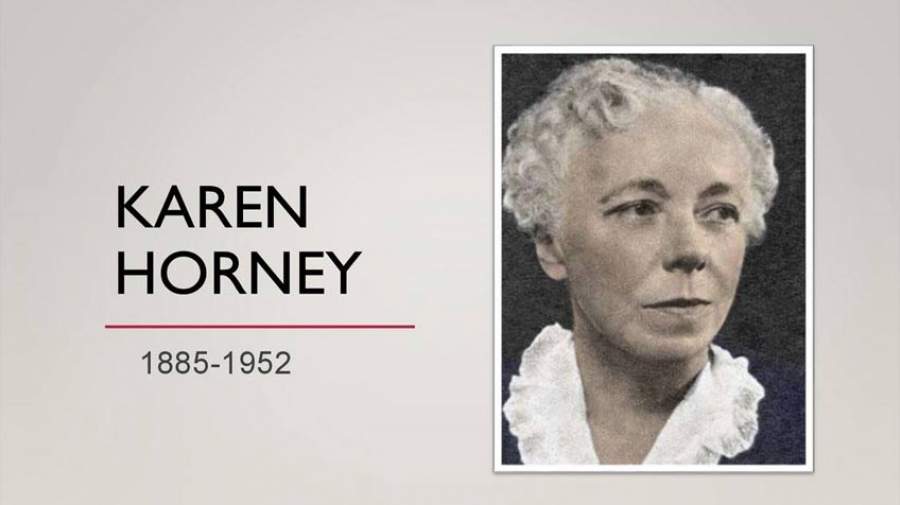
Karen Horney (1885–1952) and Her Distinctive Perspective on Psychology
Karen Horney (1885–1952) was a German-American psychoanalyst and one of the leading figures of Neo-Freudian psychoanalysis. Although she was initially trained within the Freudian tradition, she gradually became one of Freud’s most influential critics, particularly regarding his views on gender, personality, and the origins of neurosis.
Horney’s major contribution was her belief that human psychology should not be understood solely through the lens of libido and sexuality. Instead, she emphasized the crucial roles of human relationships, culture, and the individual’s sense of security or insecurity.
1. Horney’s Critique of Freud’s Theory
Horney argued that many of Freud’s theories were overly:
- Biological
- Male-centered
- Based on a limited clinical population
Criticism of “Penis Envy”
Freud proposed that girls experience penis envy during childhood, believing this to be a central factor in female psychological development.
Horney rejected this idea, arguing that what appears to be “envy” is often the result of men’s greater social status and power within society, rather than an innate biological reality.
She even introduced a complementary concept:
Womb Envy
Horney suggested that men may unconsciously experience womb envy—a sense of envy toward women’s unique capacity to:
- Become pregnant
- Give birth
- Nurture and create life
This concept later became highly influential in feminist psychology.
2. The Concept of Basic Anxiety
At the heart of Horney’s theory is the concept of basic anxiety.
She believed that many psychological problems stem from a profound feeling of:
A child’s sense of insecurity and isolation in a world perceived as potentially hostile.
Basic anxiety develops when a child experiences early relationships characterized by:
- Neglect
- Rejection
- Humiliation
- Emotional inconsistency
As a result, the child comes to believe:
“I am alone and helpless in the world.”
3. Neurotic Strategies for Coping with Anxiety
According to Horney, people develop three neurotic coping styles in response to basic anxiety.
1. Moving Toward People
The individual seeks security through compliance, excessive affection, and dependency.
Characteristics include:
- A strong need for approval
- Fear of rejection
- Dependent personality traits
2. Moving Against People
The individual seeks safety through power, dominance, and competition.
Characteristics include:
- Aggressiveness
- A desire for control
- Dominating personality traits
3. Moving Away from People
The individual protects themselves by withdrawing emotionally and distancing themselves from others.
Characteristics include:
- Extreme self-reliance
- Avoidance of intimacy
- Social withdrawal
4. The Real Self and the Idealized Self
Horney made an important distinction between two aspects of the self.
The Real Self
The authentic core of one’s personality, including:
- Natural abilities
- Genuine emotions
- The capacity for growth
The Neurotic Idealized Self
To escape feelings of inadequacy, the neurotic individual constructs an exaggerated image of themselves, believing:
- “I must be perfect.”
- “Everyone must admire me.”
- “I must never show weakness.”
According to Horney, the widening gap between the Real Self and the Idealized Self becomes a major source of psychological suffering.
5. Horney’s View of Culture
One of the key differences between Horney and Freud was their emphasis on the sources of psychological distress.
Freud primarily focused on:
- Biological instincts and drives
Horney, by contrast, emphasized:
- Culture
- Social structures
- Interpersonal relationships
She believed that many forms of modern anxiety arise from features of contemporary society, such as:
- Intense competition
- Excessive individualism
- Constant pressure to achieve success
6. Horney’s Importance in Contemporary Psychology
Karen Horney remains a highly influential figure because she was:
- One of the earliest critics of male-centered psychoanalysis
- A pioneer of feminist psychology
- An advocate for emphasizing interpersonal relationships over sexual instincts
- A major influence on later theorists such as Erich Fromm and Harry Stack Sullivan
Society and Mental Health
Articles and educational materials related to psychology and psychiatry are shared through this platform.
Channel ID:
https://ble.ir/jamehvasalamtravan
Dr. Hamid Yousefi’s Website
Dr. Hamid Yousefi
Psychiatrist







بدون دیدگاه