


Body Dysmorphic Disorder (BDD): A Psychiatric Perspective
Body Dysmorphic Disorder (BDD) is a significant yet frequently underdiagnosed psychiatric condition. Individuals with BDD become obsessively preoccupied with one or more perceived flaws in their appearance. These flaws are either nonexistent or barely noticeable to others, yet they cause profound emotional distress and impairment for the affected individual.
1. Clinical Definition
From a psychiatric perspective, Body Dysmorphic Disorder is characterized by:
- Persistent preoccupation with one or more perceived defects or flaws in physical appearance.
- Repetitive behaviors or mental acts performed in response to these concerns.
- Clinically significant distress or impairment in social, occupational, or other important areas of functioning.
- Symptoms that are not better explained by another mental disorder, particularly eating disorders.
2. How Does the Patient Think?
Individuals with BDD often experience thoughts such as:
- “My nose is ugly and unbearable.”
- “My skin looks terrible, and everyone notices it.”
- “My face is asymmetrical.”
- “People judge me because of how I look.”
- “I can’t live a normal life until this flaw is fixed.”
The degree of insight varies among patients:
- Some have good or fair insight, recognizing that their beliefs may be exaggerated.
- Others have poor insight.
- In some cases, the beliefs become delusional, meaning the individual remains absolutely convinced that the defect is obvious and catastrophic despite clear evidence to the contrary.
3. Core Diagnostic Features
A. Preoccupation with a Perceived Physical Defect
Common areas of concern include:
- Nose
- Skin
- Hair
- Jaw
- Lips
- Eyes
- Facial shape
- Height or body build
- Body odor or the appearance of a specific body part
These concerns often occupy several hours of the person’s day.
B. Repetitive Behaviors or Mental Rituals
To reduce anxiety, patients may engage in compulsive behaviors such as:
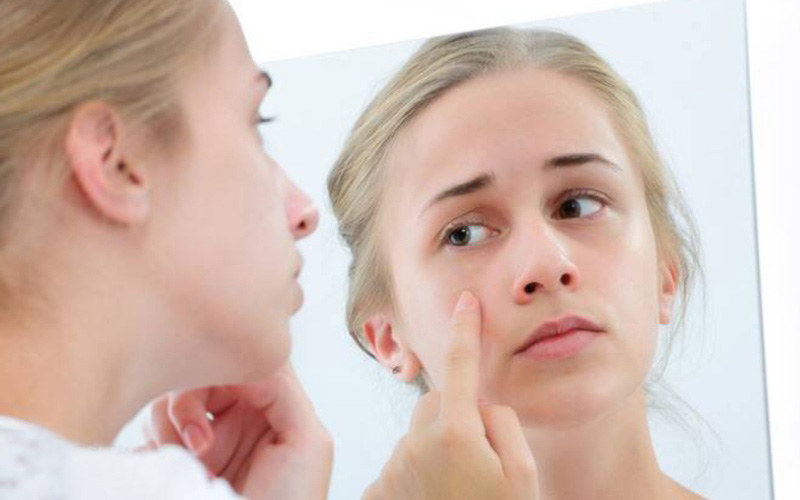
- Repeated mirror checking or, conversely, avoiding mirrors altogether
- Constant touching or inspecting the perceived flaw
- Excessive grooming or camouflage
- Taking numerous photographs
- Frequently seeking reassurance from others
- Constant comparison with other people
- Repeatedly pursuing cosmetic treatments
C. Significant Distress or Functional Impairment
BDD becomes clinically significant when it results in:
- Poor academic or occupational performance
- Social withdrawal
- Relationship difficulties
- Avoidance of social situations
- Depression
- Suicidal thoughts
4. Diagnostic Classification
According to the DSM-5 (Diagnostic and Statistical Manual of Mental Disorders, Fifth Edition), Body Dysmorphic Disorder belongs to the Obsessive-Compulsive and Related Disorders category because it involves:
- Intrusive, obsessive thoughts
- Repetitive and reassurance-seeking behaviors
- A cognitive-behavioral pattern similar to Obsessive-Compulsive Disorder (OCD)
Muscle Dysmorphia
A related presentation, seen particularly in men, is muscle dysmorphia, in which individuals believe:
“My body is too small, too weak, or not muscular enough.”
This condition may be associated with excessive exercise, rigid dieting, overuse of supplements, or anabolic steroid use.
5. Prevalence and Clinical Importance
BDD is more common than many clinicians realize.
Many affected individuals:
- Never seek psychiatric care.
- Instead consult dermatologists, plastic surgeons, or cosmetic physicians.
- Believe their problem is entirely physical rather than psychological.
For this reason, BDD is especially important to recognize in dermatology and cosmetic medicine settings.
6. Age of Onset and Course
- Symptoms usually begin during adolescence or early adulthood.
- The disorder is diagnosed more frequently in women, although among men seeking cosmetic procedures, BDD may be a major underlying reason for consultation.
- Without treatment, the course is often chronic.
- Symptom severity may fluctuate over time.
- Social stress, rejection, bullying, ridicule, and beauty-related pressures may worsen symptoms.
Many patients struggle for years before receiving an accurate diagnosis.
7. Risk Factors and Causes
From a psychiatric perspective, BDD has a multifactorial etiology.
A. Biological Factors
- Genetic vulnerability shared with OCD and anxiety disorders
- Abnormal visual information processing and selective attention to details
- Possible involvement of neurochemical systems
B. Psychological Factors
- Low self-esteem
- Perfectionism
- Heightened sensitivity to shame
- Defectiveness and worthlessness schemas
- Distorted interpretation of physical appearance
C. Social and Developmental Factors
- Bullying or teasing about appearance
- Childhood and adolescent victimization
- Family or peer pressure
- Social media exposure
- Beauty-focused cultural ideals
8. Important Clinical Features
Psychiatrists should be particularly alert when patients:
- Spend excessive time thinking about their appearance.
- Have undergone multiple cosmetic procedures without satisfaction.
- Avoid leaving home or avoid cameras, bright lighting, or social gatherings.
- Constantly seek reassurance.
- Believe others focus exclusively on their perceived defect.
- Develop depression or suicidal thoughts because of their appearance.
Insight
Insight exists on a spectrum:
- Good
- Fair
- Poor
- Absent (delusional beliefs)
The degree of insight significantly affects prognosis and treatment adherence.
9. Differential Diagnosis
Distinguishing BDD from similar conditions is essential.
1. Obsessive-Compulsive Disorder (OCD)
Both disorders involve obsessions and compulsions, but in BDD the primary focus is physical appearance.
2. Eating Disorders
If the preoccupation is mainly with weight and body fat, anorexia nervosa or bulimia nervosa is more likely.
If concerns involve other body parts or overall ugliness, BDD is more probable.
3. Major Depressive Disorder
Depressed individuals may perceive themselves as unattractive, but appearance-related preoccupation is not the central feature.
4. Social Anxiety Disorder
In social anxiety, the fear centers on negative evaluation generally.
In BDD, the fear is specifically linked to a perceived physical defect.
5. Delusional Disorder, Somatic Type
Differentiation may be difficult in patients with absent insight and fixed delusional beliefs.
6. Normal Appearance Concerns
Ordinary dissatisfaction with appearance should not be confused with BDD.
Key distinguishing factors include:
- Intensity of preoccupation
- Degree of distress
- Compulsive behaviors
- Functional impairment
10. Psychiatric Comorbidities
BDD rarely occurs in isolation.
Common comorbid conditions include:
- Major Depressive Disorder
- Anxiety Disorders
- Obsessive-Compulsive Disorder
- Social Anxiety Disorder
- Substance Use Disorders
- Personality Disorders, particularly avoidant and obsessive-compulsive traits
- Eating Disorders in some individuals
11. Suicide Risk
This is one of the most critical aspects of BDD.
The disorder is strongly associated with:
- Suicidal thoughts
- Suicide attempts
- Severe hopelessness
Patients may believe:
- Their appearance is unbearable.
- No one understands them.
- Life is meaningless unless the perceived defect is corrected.
Therefore, suicide risk assessment is essential and should always be performed.
12. Relationship with Cosmetic Procedures
Many individuals with BDD repeatedly pursue:
- Plastic surgery
- Cosmetic injections
- Dermatologic treatments
- Repeated aesthetic procedures
However, in most cases:
- Lasting satisfaction is not achieved.
- The focus shifts from one body part to another.
- Symptoms worsen.
- Patients may become angry with or dissatisfied toward their physicians.
From a psychiatric standpoint, cosmetic procedures are not a treatment for BDD.
Key Clinical Considerations
Associated Behaviors
- Mirror checking
- Camouflaging perceived defects
- Reassurance seeking
- Comparing appearance with others
- Repeated pursuit of cosmetic treatments
Assessing Insight
Determine whether the patient:
- Recognizes that their perception may be exaggerated, or
- Is completely convinced that the defect is real.
Functional Impairment
Assess the impact on:
- Employment
- Education
- Relationships
- Leaving the house
- Romantic and social life
Comorbid Conditions
Evaluate for:
- Depression
- Anxiety
- OCD
- Eating disorders
- Substance misuse
Risk Assessment
Assess for:
- Suicidal ideation
- Suicide plans
- Previous suicide attempts
- Impulsive behaviors
13. Treatment from a Psychiatric Perspective
First-Line Treatment
1. Cognitive Behavioral Therapy (CBT)
Specialized CBT for BDD is highly effective.
Treatment focuses on:
- Correcting distorted beliefs about appearance
- Reducing mirror checking and reassurance seeking
- Exposure and Response Prevention (ERP)
- Improving self-esteem and core beliefs
- Reducing social avoidance
2. Pharmacotherapy
The primary medications are Selective Serotonin Reuptake Inhibitors (SSRIs), including:
- Fluoxetine
- Sertraline
- Escitalopram
- Fluvoxamine
- Other SSRIs
Important considerations:
- Adequate therapeutic doses are often required.
- Clinical improvement may take several weeks to several months.
- SSRIs can be effective even in severe cases or in patients with poor insight.
Additional specialized interventions may be necessary to address co-occurring psychiatric disorders.
The standard first-line treatment for BDD consists of:
- Selective Serotonin Reuptake Inhibitors (SSRIs)
- Cognitive Behavioral Therapy (CBT)
Prognosis
The prognosis depends on several factors.
Outcomes are generally better when:
- The disorder is recognized early.
- The patient has better insight.
- Treatment is consistent.
- Comorbid conditions are effectively managed.
Prognosis is generally poorer when:
- The disorder remains chronic and untreated.
- The patient repeatedly undergoes cosmetic procedures.
- Severe depression or suicidality is present.
- Insight is markedly impaired.
Final Note
As with all psychiatric disorders, the diagnosis of Body Dysmorphic Disorder should be made by qualified mental health professionals.
The information provided here is intended solely for public education and to encourage consultation with qualified healthcare professionals. It is not sufficient for diagnosing oneself or others.
Society and Mental Health
This page shares educational content related to psychology and psychiatry.
🆔 Channel:
https://ble.ir/jamehvasalamtravan
Dr. Hamid Yousefi
Psychiatrist






)
بدون دیدگاه